
In a studio, your bed is always in the room. It is there when you work, when friends come over and when you are trying to relax on the couch. Even if you love your apartment, it can start to feel like you live in your bedroom.
A room divider fixes that. Not a wall, just a clear signal that says “this side is for sleeping, that side is for living.” The trick in a rental is doing it without screws, ceiling tracks or anything that costs you your deposit.
Here are 7 studio apartment divider ideas that stand on their own, plus how to pick the right one for your layout.
First, decide what you want the divider to do
Every divider does one of three jobs. Knowing which one you need saves you from buying the wrong thing.
- Block the view. You want guests on the couch to not see your unmade bed. You need something solid or nearly solid, at least as tall as eye level when seated, so around 48 inches.
- Define a zone. You just want the room to feel like two spaces. A rug, a sofa back or a low shelf is enough.
- Add storage. You are short on space and want the divider to hold things too. Open shelving wins here.
Most studios need a mix: some storage, some separation, and enough light getting through so the sleeping side does not turn into a cave.
Measure these before you buy
- Where the light comes from. If your only window is on the bed side, a solid divider will make the living side dark. Choose open shelves or a curtain you can pull back.
- Walkway width. Keep at least 30 inches to walk around the divider.
- Ceiling height. Tension rods and floor-to-ceiling poles have a range. Most fit ceilings from about 7 to 10 feet.
- Floor type. On hardwood, put felt pads under anything you might slide later.
7 studio apartment divider ideas (no drilling)
1. An open cube bookcase
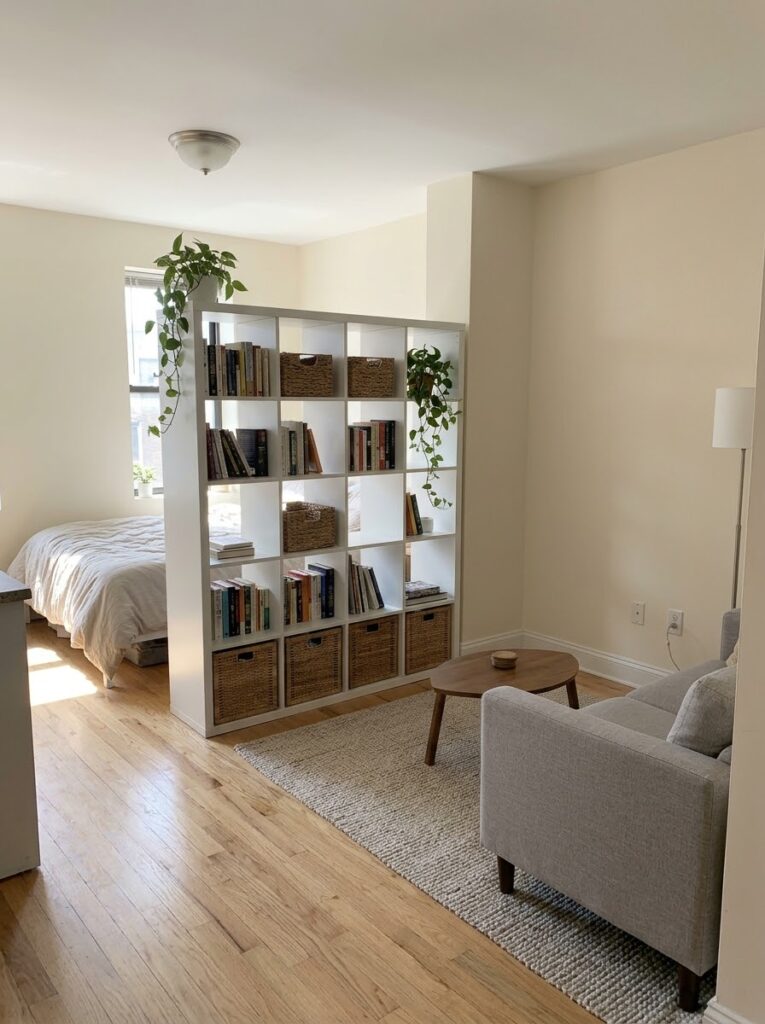
This is the classic studio divider for a reason. A tall cube shelf placed at a right angle to the wall splits the room, gives you a full unit of storage, and still lets light through the open squares. Style the living side with books and baskets, and use the bed side for folded clothes or a nightstand shelf.
Choose a unit that is finished on both sides, so the back looks as good as the front. For stability, put the heaviest things in the bottom row and use a tip-over strap that clips to the shelf and a heavy piece of furniture, not the wall.
Cost: $60 to $150. Best for: storage plus separation.
2. A tension rod curtain
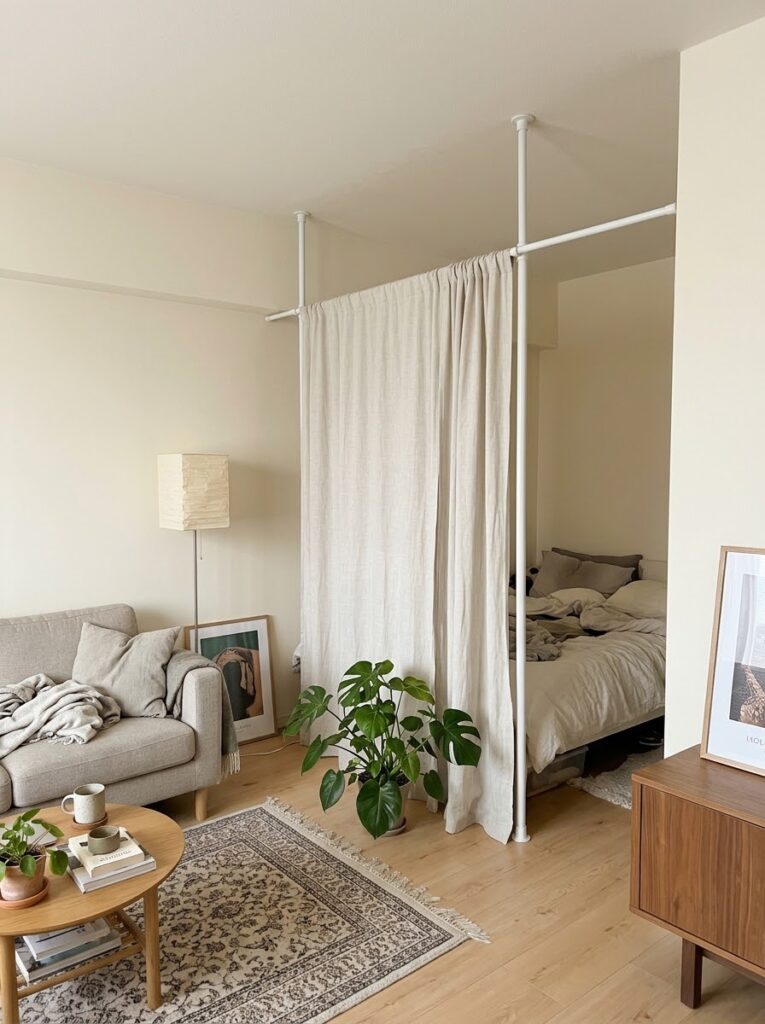
A floor-to-ceiling tension pole system holds a curtain rod across the room with pressure alone. Hang a light linen curtain and you have a soft wall you can open in the morning and close at night. It is the cheapest way to fully hide a bed.
Pick a curtain that is a little longer than you need so it just touches the floor. Light colors keep the room bright. If you want privacy at night but light during the day, a sheer layer plus a heavier panel gives you both.
Cost: $40 to $90. Best for: fully hiding the bed.
3. A folding screen
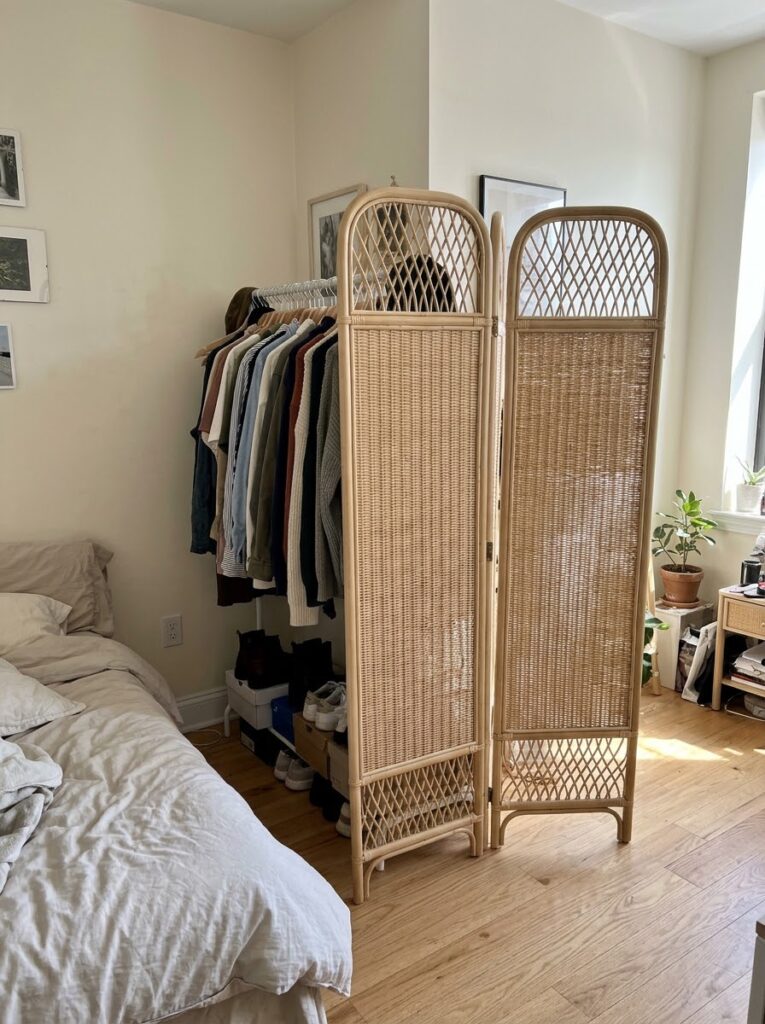
A three or four-panel folding screen is the most flexible divider on this list. You can move it in seconds, fold it flat when friends visit, or angle it to hide just the corner you want. Rattan and light wood screens let a little light through and look warm rather than heavy.
Cost: $50 to $130. Best for: renters who change their layout often.
4. A rug that draws the line
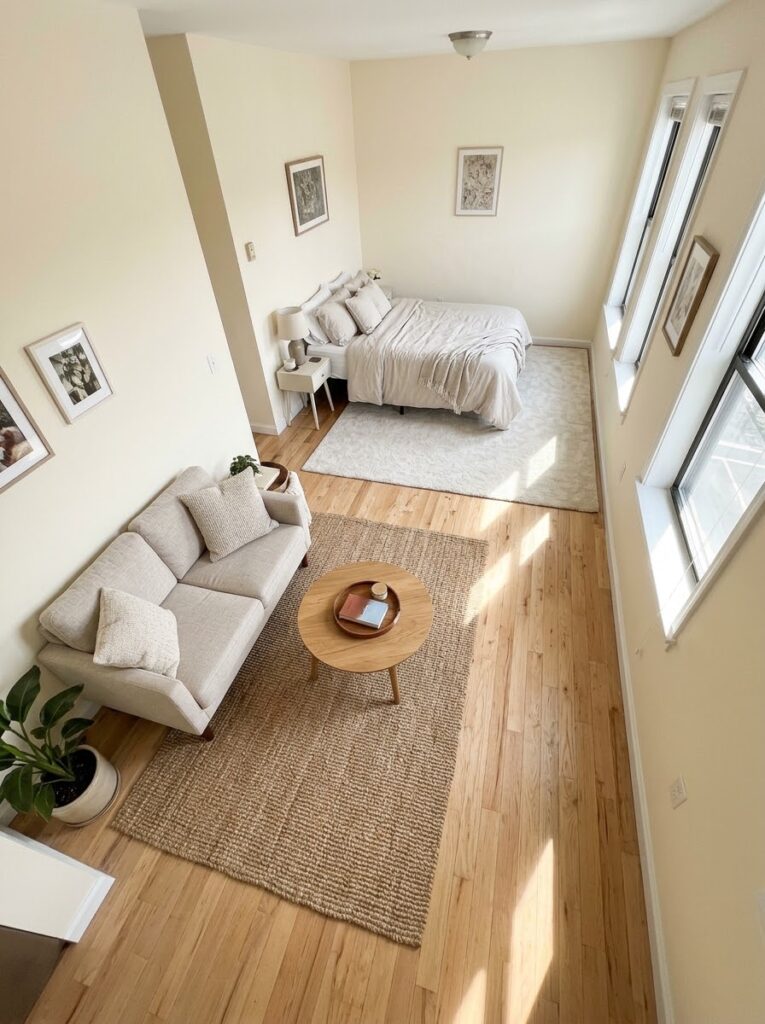
It sounds too simple to work, but two rugs make two rooms. Put one rug under the sofa and coffee table and a different one under the bed. Your eye reads each rug as its own space, even with nothing standing between them.
The rugs should not touch. Leave a strip of floor between them, and make the living room rug big enough that at least the front legs of the sofa sit on it.
Cost: $60 to $200 for two rugs. Best for: small studios where any tall divider would feel cramped.
5. The back of the sofa plus a console table
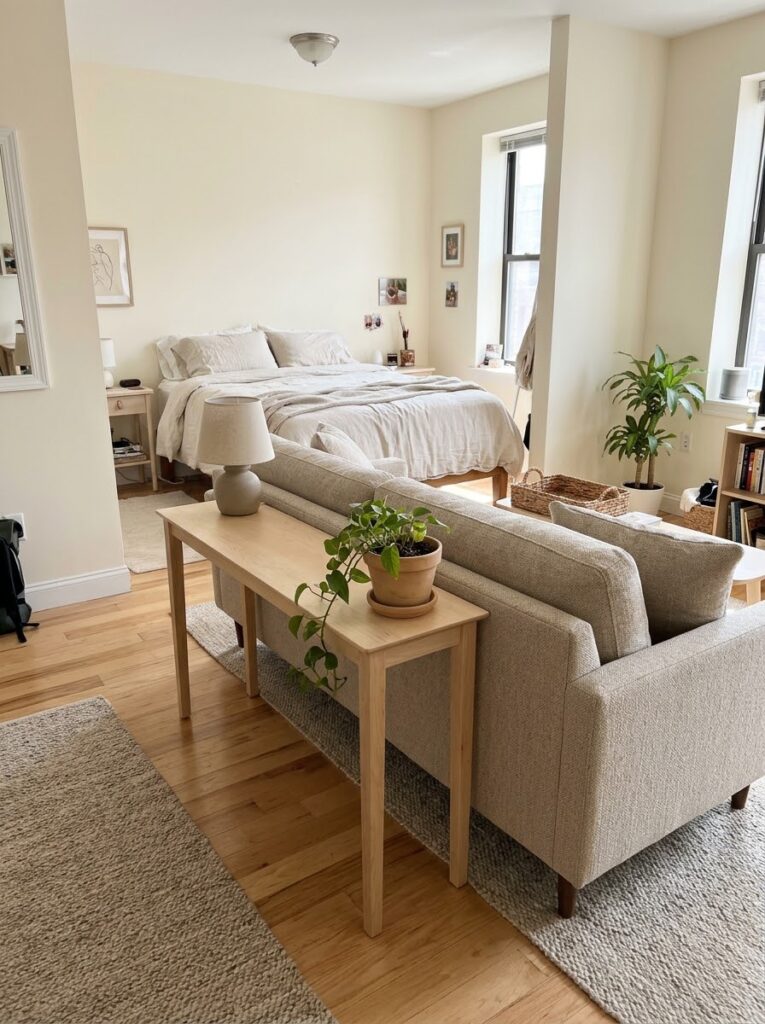
Float your sofa in the middle of the room with its back toward the bed. Then push a slim console table against the back of the sofa. The sofa becomes a low wall, and the console gives you a surface for a lamp, a plant and a basket of chargers on the bed side.
This layout works best in studios that are longer than they are wide. It also stops the classic studio problem of every piece of furniture being pushed against a wall.
Cost: $50 to $150 for the console. Best for: long, narrow studios.
6. A row of tall plants
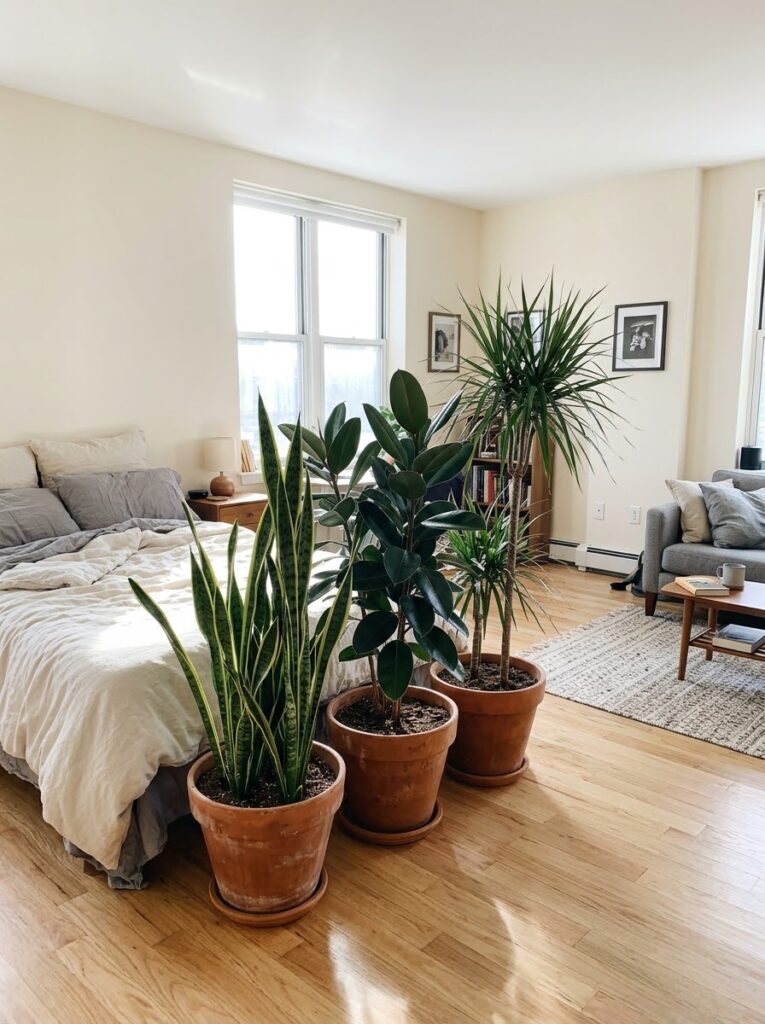
Three tall plants in matching pots, or a tiered plant stand, make a living divider that softens the whole room. It is not a full visual block, but it frames the bed and makes the space feel intentional. Snake plants, rubber plants and dracaenas handle lower light well.
Cost: $40 to $150. Best for: bright studios and plant lovers.
7. A leaning ladder shelf with a back
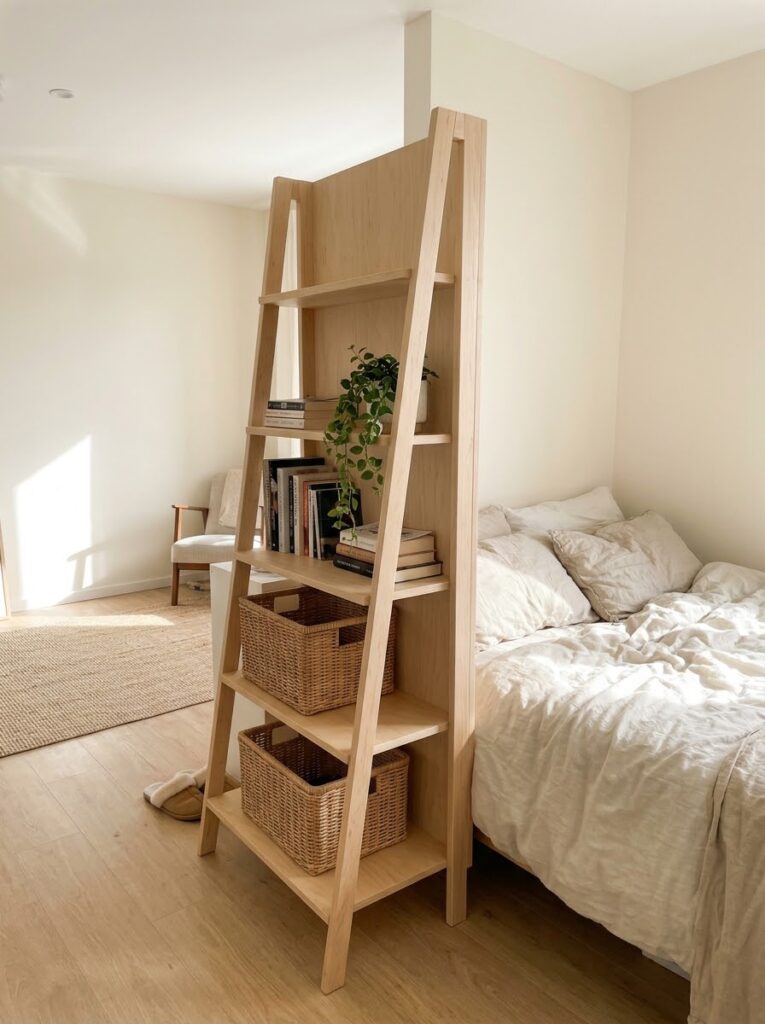
A freestanding ladder shelf with a closed back panel works like a slimmer bookcase. It takes up less floor space, still holds baskets and books, and gives the bed corner a sense of its own wall. Look for one that stands without leaning on the wall, often called a “freestanding” or “A-frame” ladder shelf.
Cost: $50 to $120. Best for: tight studios that need something slim.
Which divider fits your studio?
| Divider | Approx. cost | Hides the bed? | Adds storage? | Light gets through? |
|---|---|---|---|---|
| Open cube bookcase | $60 to $150 | Partly | Yes, a lot | Yes |
| Tension rod curtain | $40 to $90 | Fully | No | When open |
| Folding screen | $50 to $130 | Mostly | No | A little |
| Two rugs | $60 to $200 | No | No | Yes |
| Sofa back + console | $50 to $150 | Partly | A little | Yes |
| Tall plants | $40 to $150 | Partly | No | Yes |
| Ladder shelf | $50 to $120 | Partly | Yes | Mostly |
Mistakes that make a studio feel smaller
- A solid divider in front of the only window. The living side goes dark. Use open shelves or a curtain instead.
- Dividing the room exactly in half. Give the living area more space than the bed. Sixty to seventy percent for living feels right in most studios.
- Too many dividers. One clear divider beats three half measures. Pick one main piece and let a rug do the rest.
- Dark, heavy materials. Black metal and dark wood look like walls. Light wood, rattan and linen keep things airy.
A simple layout that works in most studios
If you are not sure where to start, try this. Put the bed in the corner farthest from the front door. Place an open cube bookcase at the foot of the bed, sticking out from the wall about two thirds of the bed’s length. Float the sofa facing away from the bookcase, with a rug under it. Now the bed is hidden from the door, you have a full shelf of storage, and the living area feels like its own room.
Total cost for the bookcase and rug is usually under $200, and it all comes with you when you move.
Light each zone on its own
Lighting does as much to split a studio as any divider. When one overhead light covers the whole room, everything blends together. When each zone has its own light, each one feels like a separate room in the evening.
- Living side: a floor lamp next to the sofa and a small table lamp on the console. Warm bulbs around 2700K feel calm.
- Sleeping side: a clip-on reading light on the headboard or a small lamp on a shelf of the divider. No need for anything bright.
- Kitchen or desk: a plug-in under-cabinet light strip or a desk lamp, so work and cooking have their own light.
At night, switch the overhead light off and use only the lamps in the zone you are in. The rest of the room falls into shadow, and the studio suddenly feels like it has walls.
Style the divider so it looks intentional
A bookcase divider can look like a showroom or like a storage unit dropped in the middle of the room. The difference is styling.
- Leave a third of the cubes empty or nearly empty. A plant, a candle or one stack of books per cube is enough. Packed shelves make a divider feel like a wall of clutter.
- Repeat colors. Pick two or three colors for baskets and objects and repeat them across the shelf.
- Heavy and closed at the bottom, light and open at the top. Baskets on the lowest row, books in the middle, small objects and plants up top.
- Face the nicer side toward the living area. That is the side guests see.
More renter-friendly fixes for every room. Get the free guide Small Space, Big Storage: 21 Renter-Friendly Hacks, with real prices and what to buy first.
Common questions
How do I divide a studio apartment without drilling?
Use freestanding pieces: a cube bookcase, a folding screen, a tension pole curtain, or furniture placement like a floating sofa with a console behind it. All of them stand on their own and leave no marks.
What is the cheapest studio apartment divider?
Two rugs to define zones, or a tension rod with a simple curtain. Both can come in under $60.
Are tension rod dividers safe?
They are safe when used within their weight limit and ceiling height range. Use a light curtain, tighten the pole firmly, and check it every few weeks, since pressure can loosen over time.
Should my bed face the divider?
Ideally the bed sits behind the divider and is not visible from the front door. If space allows, place the head of the bed against a solid wall and let the divider run along the side or foot of the bed.
The short version
A studio feels bigger, not smaller, when each part of it has a job. Pick one divider that matches what you need most: an open bookcase for storage, a curtain to fully hide the bed, or a rug and sofa layout if the room is tight. Keep it light, keep the window clear, and your studio will finally feel like more than one room.
Related reads: 9 Small Apartment Storage Hacks for Renters and Open Closet Ideas for Small Bedrooms.