
The biggest closet in most small apartments is not a closet at all. It is the space under the bed. A standard queen bed covers about 33 square feet of floor, and in most bedrooms that space holds dust, one lost sock and a suitcase you forgot about.
With the right setup, that same space can hold a whole season of clothes, every spare sheet and towel you own, and your shoes. No drilling, no new furniture, and it all moves with you.
Here is how to turn the space under your bed into a real closet, step by step.
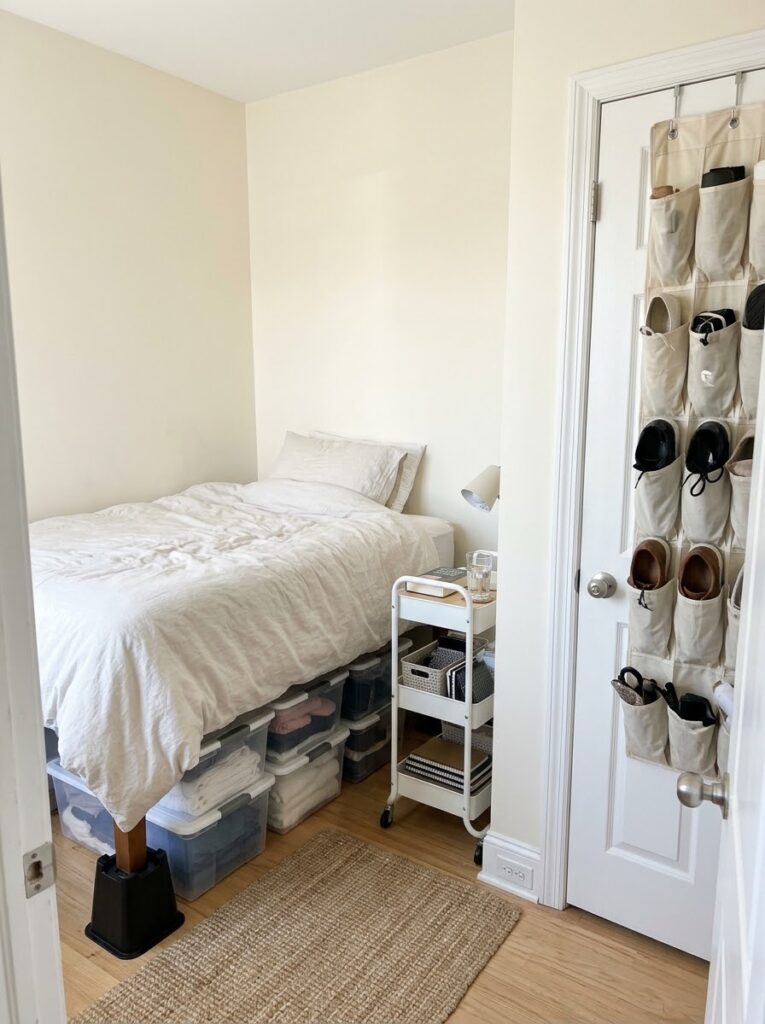
Step 1: Find out how much space you actually have
Grab a tape measure and check three numbers before you buy anything:
- Clearance height. Measure from the floor to the bottom of the bed frame. Under 6 inches means you need risers or very flat bags. Over 10 inches means you can use deep drawers.
- Depth. Measure from the side of the bed to the middle. That is how deep your bins can be if you pull them out from one side.
- Obstacles. Note any center legs, support slats or bed rails that will block a bin.
Write these down. They decide which of the ideas below fit your bed.
Step 2: Raise the bed if you need to
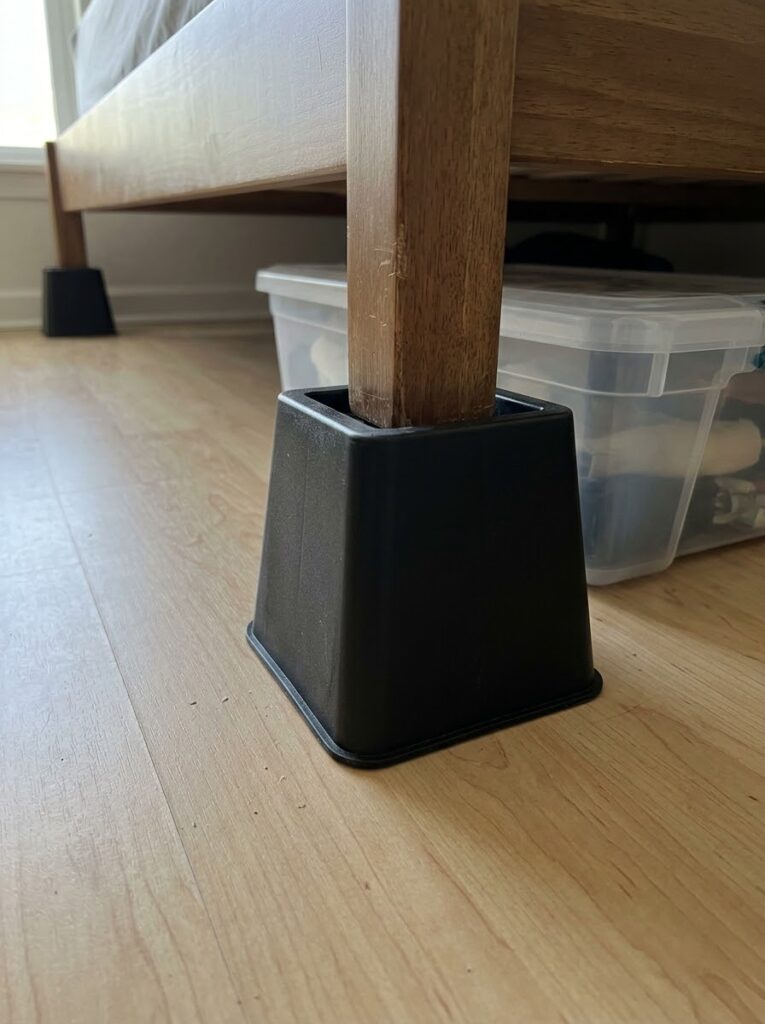
Bed risers are small blocks that sit under each leg and lift the bed by 3 to 8 inches. That small lift can more than double your storage space. Risers are the single best value in small apartment storage: about $15 to $25 for a set.
Pick risers with a cup on top that the bed leg sits inside, so the bed cannot slide off. Stacking risers is not safe. If you want more height, buy one taller set. Some risers have built-in outlets and USB ports, which turns the side of the bed into a charging spot.
Cost: $15 to $25. Adds: 3 to 8 inches of height.
Step 3: Choose the right containers
Rolling drawers for things you use every week
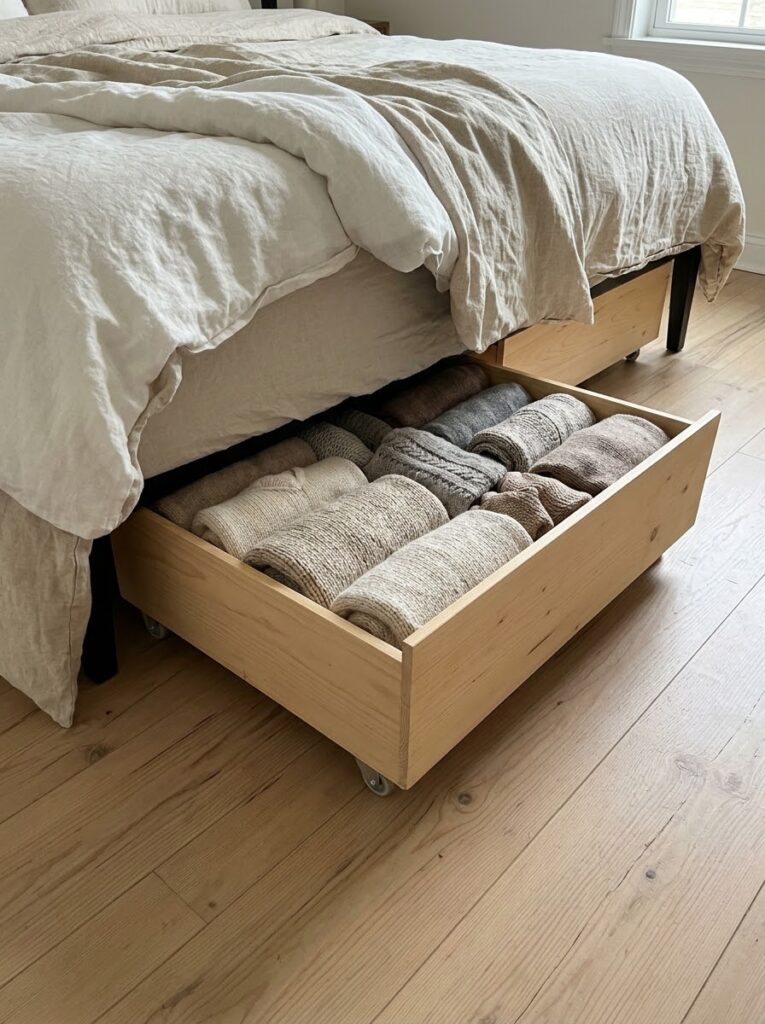
Under-bed drawers on wheels slide out with one hand, which matters more than you think. If getting to your stuff means crawling on the floor and wrestling a bin, you will stop using it. Rolling drawers make the space under the bed feel like a dresser.
Use them for anything you reach for weekly: sweaters, workout clothes, pajamas. Look for drawers with a lid or a fabric cover to keep dust out.
Cost: $25 to $40 each.
Clear bins for things you need to find fast
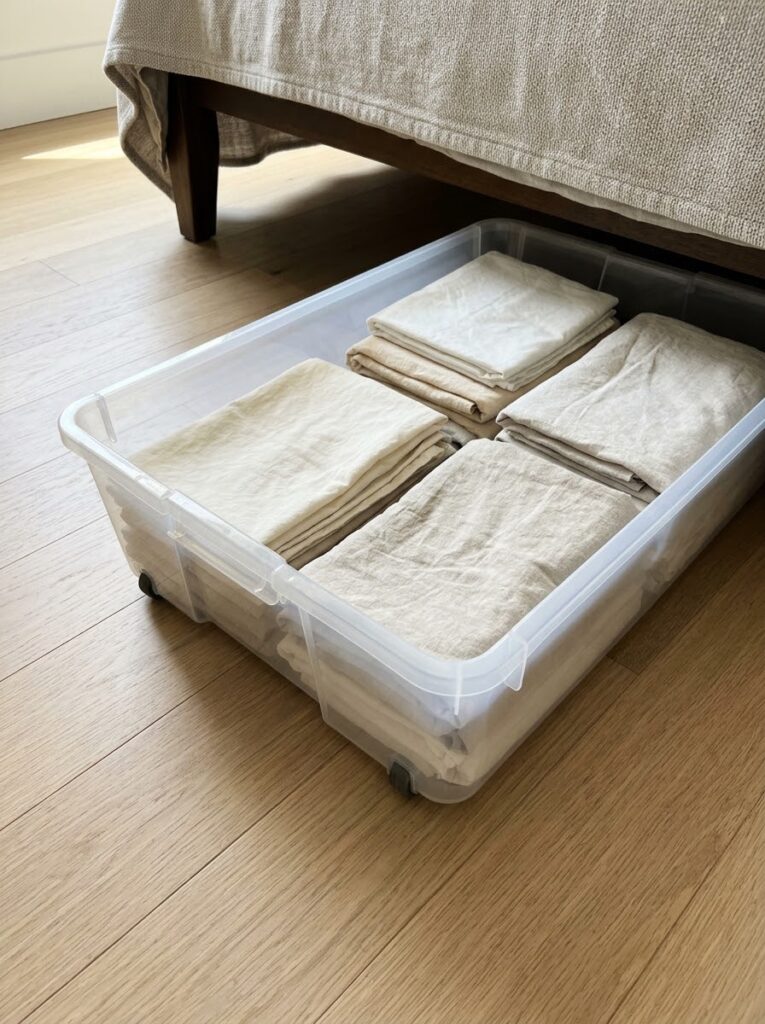
Clear plastic bins with lids are perfect for spare bedding, extra towels and anything else you want to see at a glance. Label the short end that faces out, so you never have to open three bins to find the right one.
Cost: $25 to $40 for a set of two.
Vacuum bags for the off-season
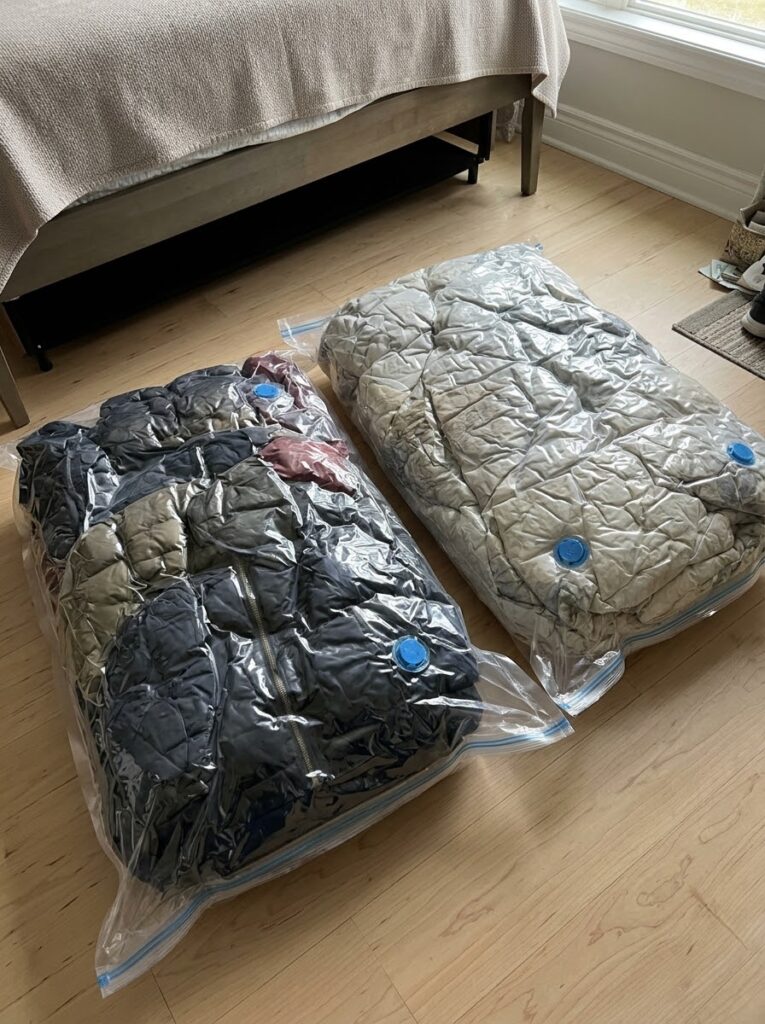
Vacuum storage bags shrink bulky things like winter coats, comforters and puffy jackets to a fraction of their size. They are ideal for the stuff you only need once or twice a year. Two or three bags under the bed can hold an entire winter wardrobe.
A tip: do not vacuum-pack down jackets or wool for more than a season. They need to breathe to keep their loft. Fluff them back up as soon as you take them out.
Cost: $15 to $25 for a pack.
A shoe organizer that slides under
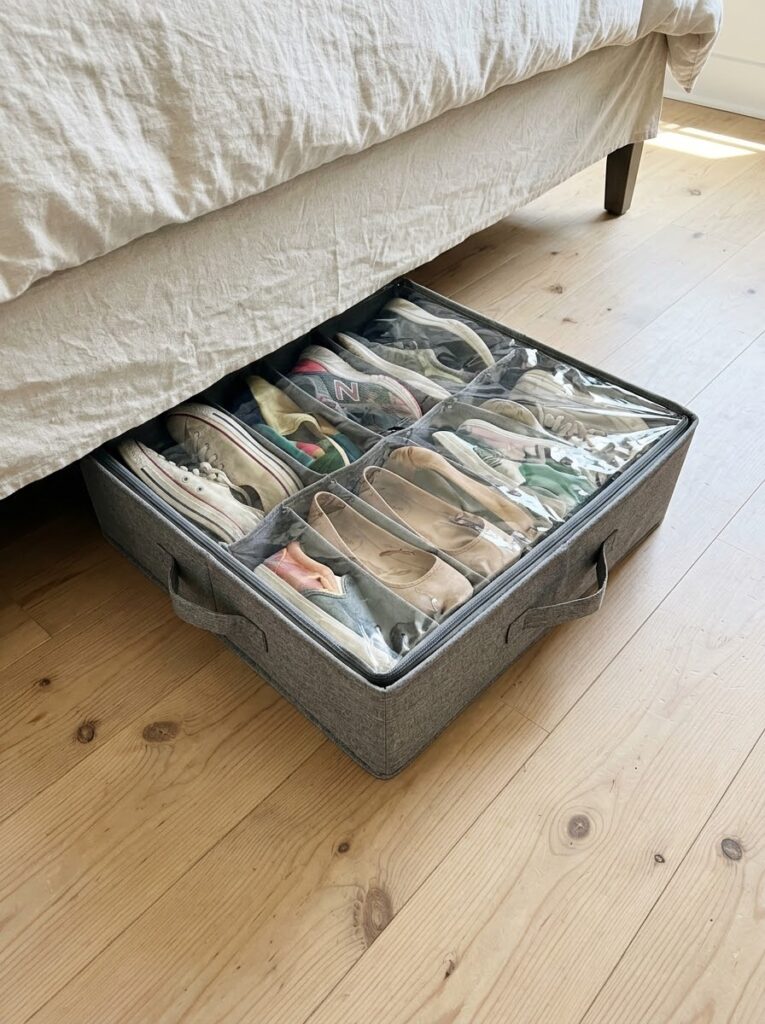
Shoes are one of the biggest sources of clutter in a small bedroom. A flat under-bed shoe organizer with a clear lid holds 12 to 16 pairs and keeps them out of the walkway. Keep everyday shoes by the door and the rest under the bed.
Cost: $15 to $30.
Step 4: Hide it all with a bed skirt
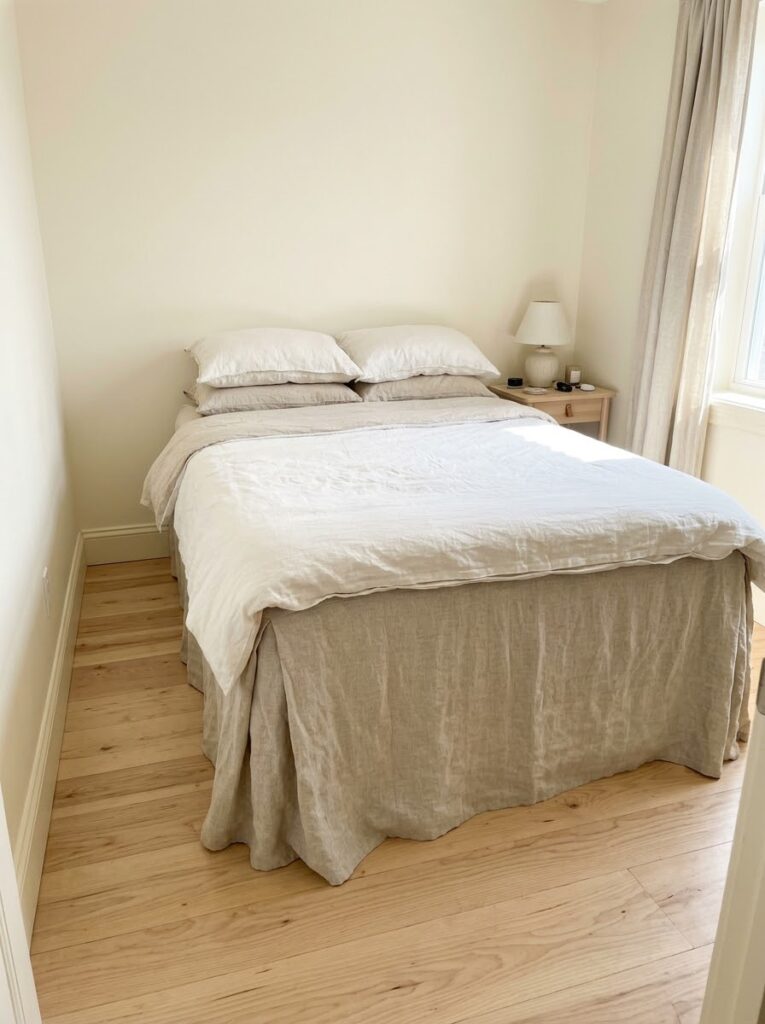
Once the space under your bed is full, the last step is making it look calm. A bed skirt, also called a dust ruffle, drops from the bed frame to the floor and hides every bin. Choose one with a split corner so it works with bed frames that have legs.
Pick a skirt in a neutral color close to your bedding. Measure your new height after adding risers, because standard skirts are often too short for raised beds. Look for “extra long drop” if your bed is raised more than a few inches.
Cost: $20 to $40.
What goes where: an under-bed closet plan
| Zone | Container | What to store | Approx. cost |
|---|---|---|---|
| Side you get in on | Rolling drawers | Weekly clothes, pajamas | $25 to $40 each |
| Other side | Clear bins | Sheets, towels, spare bedding | $25 to $40 for two |
| Middle (hard to reach) | Vacuum bags | Winter coats, comforters | $15 to $25 |
| Foot of the bed | Shoe organizer | Off-duty shoes | $15 to $30 |
| All around | Bed skirt | Hides everything | $20 to $40 |
All in, a full under-bed closet costs roughly $100 to $180, about the price of one small dresser, and it takes up zero extra floor space.
The rule that keeps it working
Store by how often you use it. The things you need most go closest to where you stand. The things you need once a year go in the middle, where they are hardest to reach. If you follow that one rule, the space under your bed stays useful instead of becoming a place where things disappear.
Do a quick check at the start of each season. Swap summer and winter clothes, and donate anything you did not touch in the last year.
Mistakes to avoid
- Buying bins before measuring. A bin that is half an inch too tall just sits on the floor.
- Open boxes. Without lids, everything under the bed collects dust within weeks.
- Stacking risers. It is unstable. Buy a taller set instead.
- Storing food or anything that smells. It attracts pests in a spot you rarely check.
What works for your type of bed
| Bed type | Typical clearance | Best option |
|---|---|---|
| Metal frame with legs | 7 to 12 inches | Rolling drawers and clear bins, risers if you want more |
| Wood frame with slats | 5 to 10 inches | Risers plus bins; check for a center support leg |
| Platform bed, low | 2 to 5 inches | Vacuum bags, very flat zip bins, or risers if the legs allow |
| Box spring on the floor | None | Add a simple metal frame with legs first, then use the space |
| Bed with built-in drawers | Already used | Drawer dividers and vacuum bags inside the drawers |
If your bed has a center support leg, measure each half separately. You may need narrower bins on one side.
Set it up in one afternoon
- Empty the space under the bed completely and vacuum it.
- Sort what came out into keep, donate and throw away. Most people find at least one bag of things they forgot they owned.
- Add the risers if you need them, with a helper to lift each corner.
- Measure again and buy or arrange containers to fit.
- Pack by zone: weekly things on your side, linens on the other side, off-season in the middle.
- Label the ends that face out.
- Put the bed skirt on and step back. The room should look calmer than before you started.
Picture a renter with a one-bedroom and a closet that only fits coats. After this afternoon, sweaters live in a rolling drawer, the winter duvet sits in a vacuum bag, and the chair in the corner is finally just a chair.
Keep a simple list
The downside of under-bed storage is that it is out of sight. Keep a short note on your phone that lists what is in each container: “Left drawer: sweaters. Right bin: queen sheets, two sets. Middle bag: winter coat and duvet.” It takes two minutes and saves you from pulling everything out when you need one thing.
A twice-a-year swap routine
Under-bed storage works best when you treat it like a seasonal closet. Twice a year, usually in spring and fall, take 30 minutes to swap:
- Pull out the vacuum bags from the middle.
- Wash or air out the clothes for the new season and move them to your rack, dresser or rolling drawers.
- Wash the clothes you are putting away first, so stains do not set.
- Pack them into the bags, label them, and slide them back into the middle.
- Take one minute to donate anything you did not wear last season.
Good things to keep under the bed
- Off-season clothes and shoes
- Spare sheets, pillowcases and towels
- Guest bedding and an extra pillow
- Wrapping paper and gift bags in a long flat bin
- Important documents in a fire-resistant document bag
- A small sewing or repair kit you use a few times a year
Want 20 more fixes like this? Our free guide, Small Space, Big Storage, covers every room with real prices and what to buy first.
Common questions
How much can I really store under a bed?
Under a queen bed raised on 5 inch risers, you can usually fit four to six containers: enough for a season of clothes plus spare bedding. That is close to the capacity of a small dresser.
Are bed risers safe?
Yes, when you use a single set rated for your bed’s weight and the bed legs sit fully inside the risers’ cups. Do not stack them, and check that all four legs are seated after you put the bed back down.
What is the best under-bed storage for a low bed?
Vacuum bags and very flat zip bins, usually 5 to 6 inches tall. Or add risers to create more room.
How do I keep under-bed storage dust free?
Use containers with lids or zip covers, add a bed skirt, and vacuum under the bed when you rotate seasonal clothes.
Can I use under-bed storage in a kid’s room or guest room?
Yes, and it is one of the best places for it. In a kid’s room, rolling drawers make toys easy to put away at the end of the day. In a guest room, keep the spare bedding and towels for that bed right underneath it, so guests can find them without asking.
Does storing things under the bed affect sleep?
Not if it is tidy and closed. Lidded containers and a bed skirt keep dust down, and the room looks calmer, which many people find makes it easier to wind down at night.
The short version
Lift the bed with risers, use rolling drawers for weekly things, clear bins for linens and vacuum bags for the off-season, then hide it all with a bed skirt. For about the cost of a small dresser, the space under your bed becomes the biggest closet in your apartment.
Related reads: Studio Apartment Room Divider Ideas and No Closet? How to Build One Without a Single Screw.