
Some apartments come with a closet that barely fits a vacuum. Some come with no closet at all. Either way, the result is the same: clothes on the chair, clothes on the bed, and a pile in the corner that keeps growing.
You do not need a contractor or a drill to fix it. You need a few freestanding pieces and a simple system. This guide shows how to build a closet that works in a rental, costs about $70 to $150, and comes with you when you move.
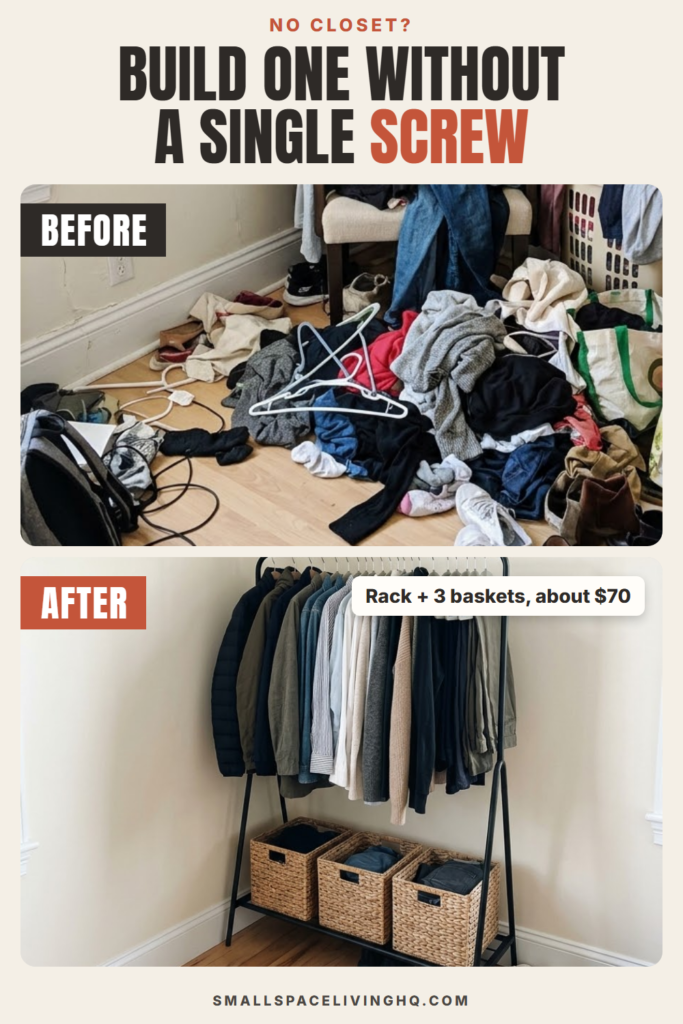
Start by sorting what needs a home
Before buying anything, spend 20 minutes sorting your clothes into three groups. It tells you exactly what kind of storage you need.
- Hang. Shirts, dresses, jackets, anything that wrinkles.
- Fold. Sweaters, jeans, t-shirts, workout clothes.
- Small stuff. Socks, underwear, belts, scarves, hats.
Count the hanging pile. Most people fit about one item per inch of rod on slim hangers, so 40 items need roughly 40 inches of rack. Now you know what size rack to buy.
The core: a garment rack with shelves
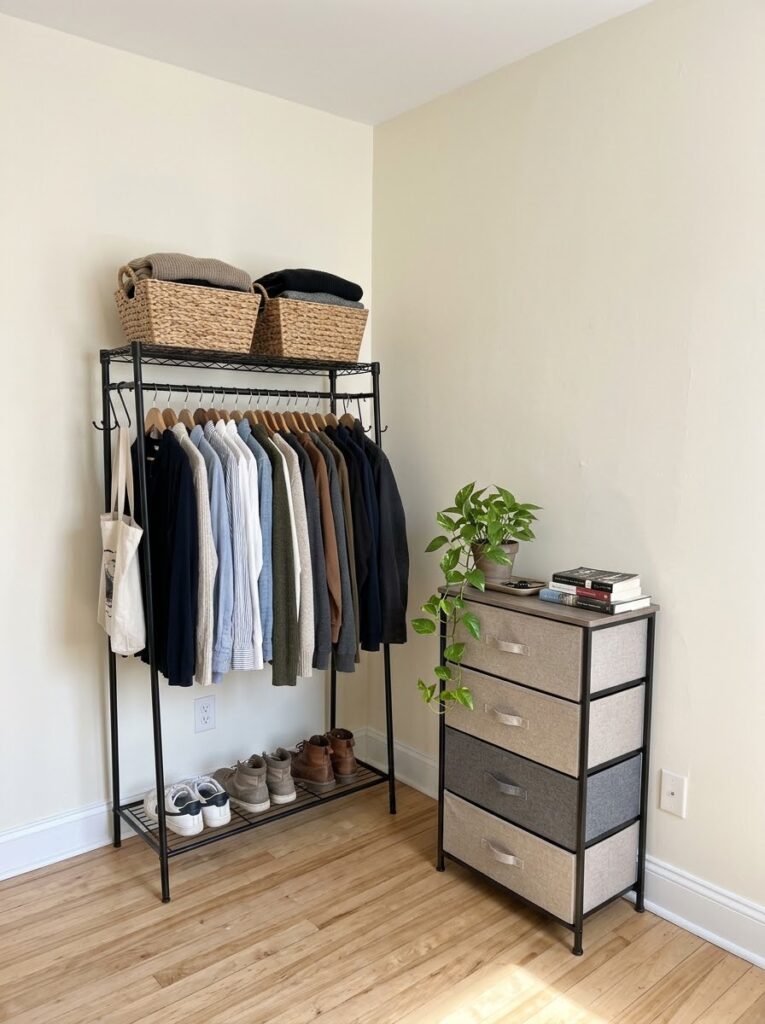
A freestanding garment rack is the heart of a no-closet setup. Skip the flimsy single-bar racks and get one with a top shelf and a bottom shelf. The top holds bags and bins, the rod holds your hanging clothes, and the bottom shelf becomes your shoe rack.
Put it against a wall in a corner of the bedroom, ideally one you do not see first when you walk in. Next to it, add a fabric drawer unit for socks, underwear and workout clothes. Keep the two pieces close in height so they look like one unit.
Cost: $40 to $100 for the rack, $30 to $50 for the drawers.
Baskets for everything folded
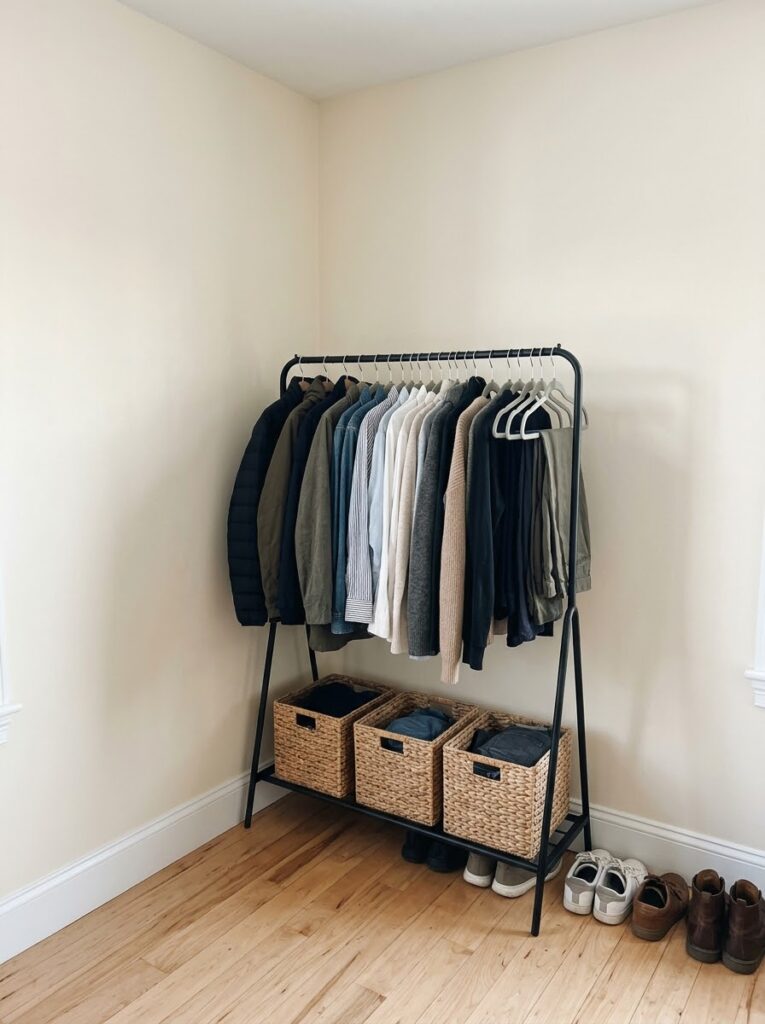
Folded clothes need a place too. Three matching woven baskets on the bottom shelf or on the floor under the rack handle jeans, sweaters and t-shirts. One category per basket keeps it simple to put things away.
Matching matters. Three of the same basket look like a planned closet. Mixed bins look like storage you gave up on.
Options if you want doors
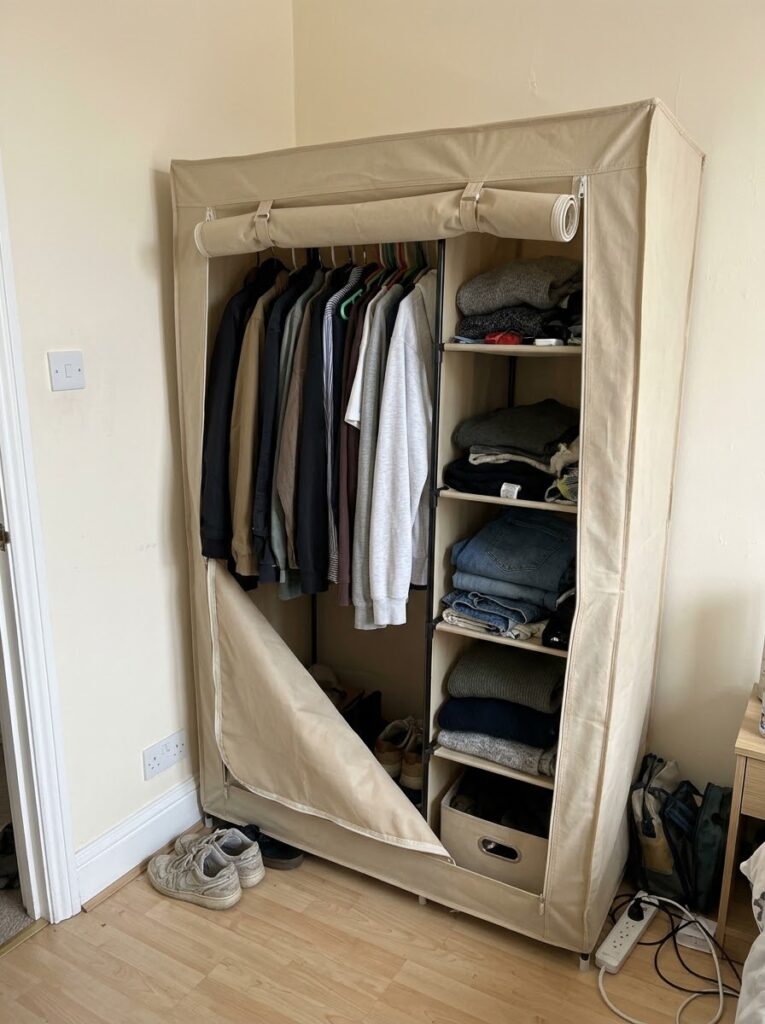
Some people want their clothes out of sight. A freestanding fabric wardrobe gives you a hanging rod and shelves behind a zip or roll-up cover. It assembles without tools, weighs very little, and costs much less than a wood wardrobe.
If you have the budget and the space, a flat-pack wood wardrobe is the more permanent choice. Look for one under 22 inches deep so it does not eat the room.
Cost: $50 to $90 for fabric, $150 to $350 for wood.
Use the back of the door
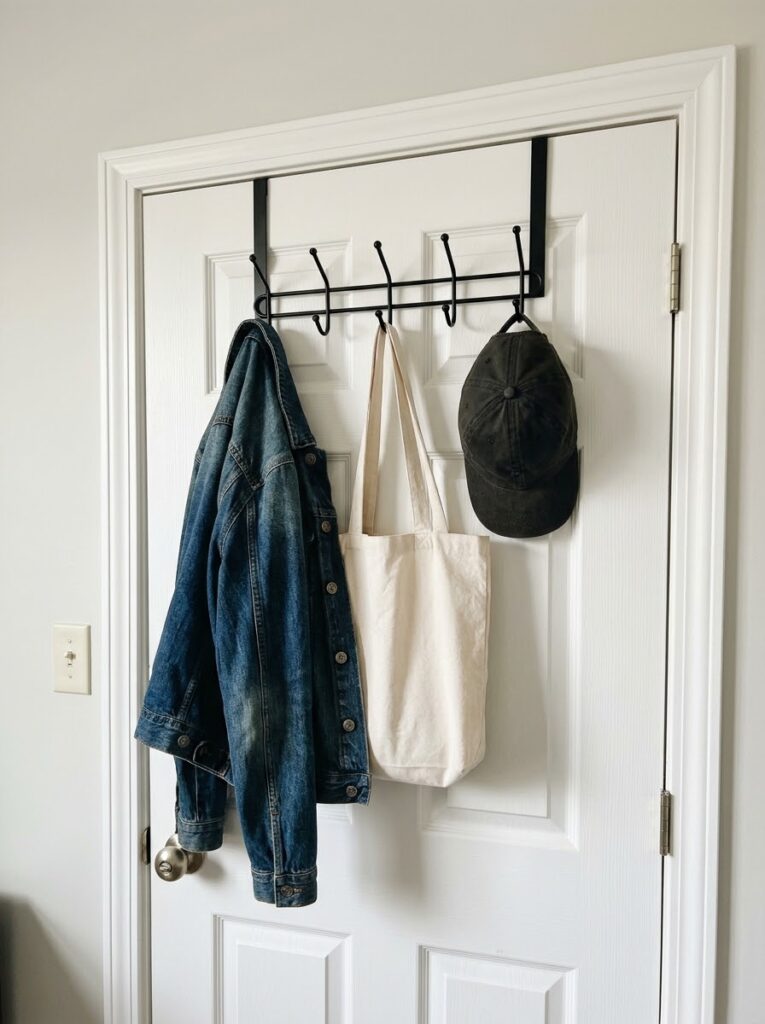
The back of your bedroom door is free storage. An over-the-door hook rack holds jackets, bags and tomorrow’s outfit, and it simply hooks over the top of the door. No holes. If you need more, an over-the-door organizer with clear pockets holds shoes or accessories.
Cost: $15 to $30.
Add a hanging shelf organizer to the rack
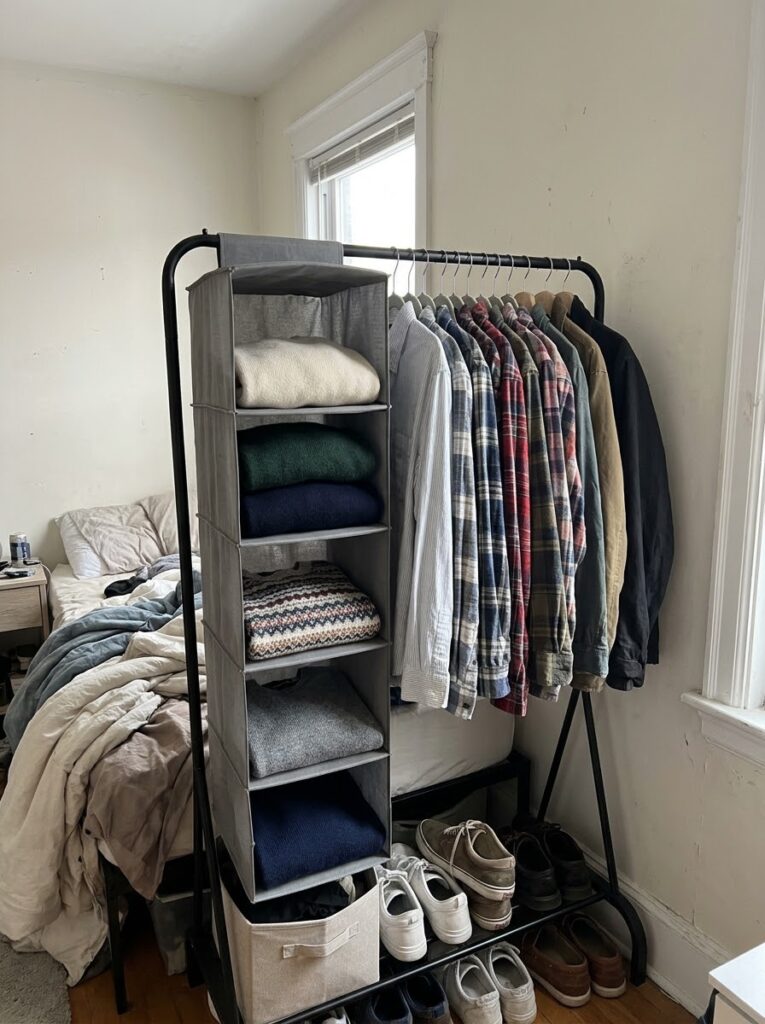
A fabric hanging shelf organizer hooks onto the rod and adds five or six shelves for sweaters and folded tops. It turns part of the rack into a dresser, which is useful if you are short on floor space for baskets or drawers.
Cost: $12 to $25.
A valet stand for the in-between clothes
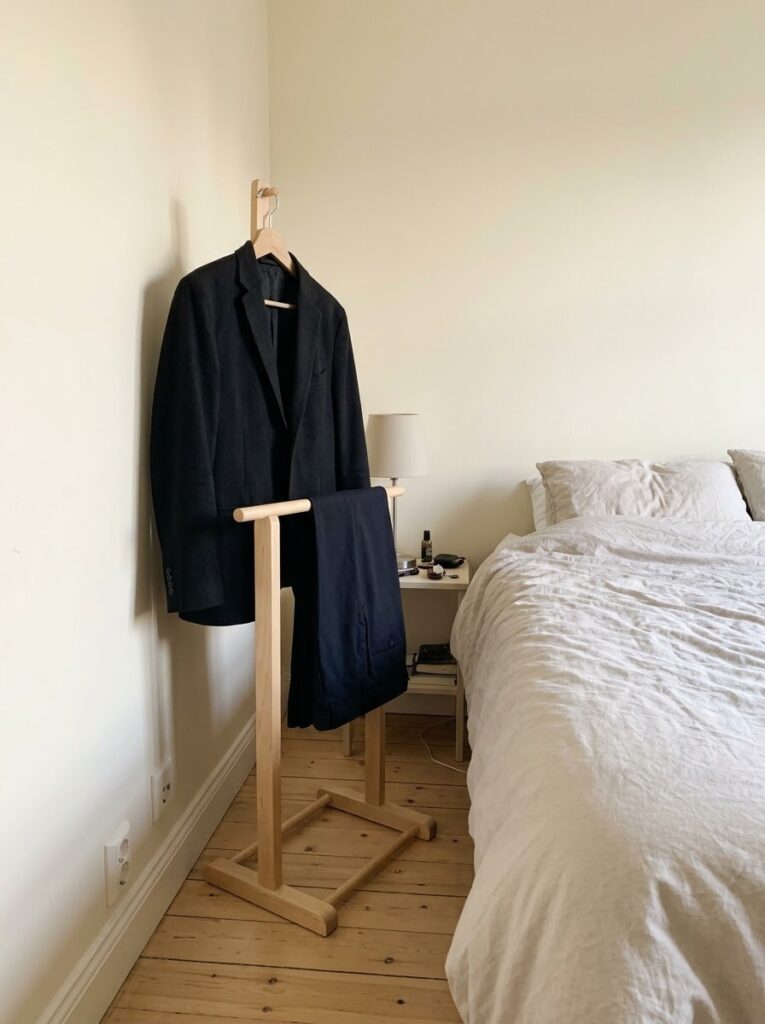
Every bedroom has clothes that are not dirty but not clean enough to put away. That is why they end up on a chair. A wooden clothes valet stand gives those clothes an official home. It looks tidy, it stops the chair pile, and it is a good place to lay out tomorrow’s outfit.
Cost: $35 to $70.
Three setups by budget
| Budget | What to buy | Holds |
|---|---|---|
| About $70 | Garment rack with shelves, 3 baskets | Most hanging and folded clothes |
| About $120 | Rack, 3 baskets, fabric drawer unit, door hooks | A full wardrobe for one person |
| About $200 | Fabric wardrobe, rack, drawers, valet stand | A wardrobe for two, with doors |
The system that keeps it tidy
An open closet only stays neat with a few simple habits:
- Use one kind of hanger. Matching slim hangers make the rack look calm and fit more.
- Leave a little space on the rod. If you cannot slide hangers apart with one hand, it is too full.
- Give every basket one job. Jeans, sweaters, tees. No mystery baskets.
- The valet stand is the only “maybe” spot. Not the chair, not the bed.
- Rotate seasons. Put off-season clothes under the bed so the rack only holds what you wear now. Our under-bed storage guide shows how.
How to choose a garment rack that lasts
Not all racks are equal, and a wobbly rack makes the whole setup feel temporary. Check these before you buy:
- Weight rating: at least 100 pounds. A full rack of jeans and jackets is heavier than you think.
- Two shelves: one on top for bins, one at the bottom for shoes.
- Locking wheels or solid feet: wheels are handy for cleaning but must lock.
- Adjustable height: lets you fit long dresses or coats, and adapt the rack in your next apartment.
- Finish: black metal looks modern, light wood looks warm. Pick one that matches your bed frame or nightstand.
Where to put your closet in the room
Placement decides whether the setup looks like a closet or like clutter. A few rules that work in most bedrooms:
- Not in the first view from the door. Put the rack on a side wall or in a corner you see last.
- Not right next to a radiator or in direct sun. Heat and light fade and damage fabric.
- Close to the mirror. Getting dressed is easier when the rack, the mirror and the valet stand are in one corner.
- With a clear edge. A small rug in front of the rack or a mirror at one end makes it read as its own zone.
Don’t forget the small stuff
Socks, jewelry, belts and hats are what make a no-closet bedroom feel messy, because they have nowhere obvious to go. Give each one a home:
- Socks and underwear: the top two drawers of the fabric drawer unit, with simple dividers or folded upright.
- Belts and scarves: S-hooks on the end of the garment rack.
- Jewelry and watches: a small tray or dish on top of the drawer unit.
- Hats and bags: the top shelf of the rack, in one lidded bin, or on the over-the-door hooks.
Make it look like part of the room
A few small touches make a garment rack look like a choice instead of a compromise. Hang the clothes from light to dark. Keep the top shelf to one or two matching bins. Add a plant beside the rack or a small framed print on the wall above the drawer unit. Little things like these make guests think “nice corner”, not “no closet”.
And when you move, everything here packs flat or rolls out the door. Your closet comes with you, which is something no built-in can say.
One corner, one weekend: a real example
Picture a renter who moves into a 12 by 11 foot bedroom with no closet. On Saturday morning, everything they own is in boxes and bags along one wall. By Sunday evening, the corner next to the window holds a black metal rack with shirts and jackets on matching hangers, three woven baskets underneath for jeans, sweaters and t-shirts, and a narrow four-drawer fabric unit for socks and workout clothes. A hook rack on the door takes coats and a bag. Off-season clothes go into two vacuum bags under the bed.
Total spend: about $140. Total time: one afternoon of assembly and one evening of folding. The only thing left on the chair is the chair.
Caring for clothes on an open rack
Clothes on an open rack are more exposed than clothes behind a door, so a little care keeps them looking good:
- Dust: clothes you wear every week will not collect dust. For pieces you wear rarely, a breathable cotton garment bag keeps them clean.
- Sun: keep the rack out of direct sunlight, which fades dark fabrics within months.
- Moths: a few cedar blocks or lavender sachets in the baskets and on the top shelf help keep moths away from wool.
- Shape: fold heavy knits instead of hanging them, so the shoulders do not stretch.
When it is time to move
This is where a no-closet setup beats any built-in closet. The rack comes apart in minutes, the baskets nest inside each other, the fabric drawers fold flat, and the hooks lift off the door. In your next apartment, the same pieces become an open closet, a guest room setup, or extra storage next to a real closet. Nothing you bought is wasted.
Get the full renter-friendly playbook. Our free guide, Small Space, Big Storage: 21 Renter-Friendly Hacks, covers every room with real prices.
Common questions
What can I use instead of a closet?
A garment rack with shelves, a freestanding fabric or wood wardrobe, a fabric drawer unit, over-the-door hooks and baskets. Together they cover hanging clothes, folded clothes and small items.
How do I hide clothes without a closet?
Use a fabric wardrobe with a cover, or place a folding screen or curtain on a tension pole in front of a garment rack.
Is a garment rack strong enough for everyday use?
A good rack with a top and bottom shelf and a weight rating of 100 pounds or more handles a full wardrobe. Avoid thin single-bar racks for daily use.
How do I store shoes with no closet?
Use the bottom shelf of the rack for everyday pairs, an over-the-door pocket organizer, or a flat under-bed shoe organizer for the rest.
Will my landlord mind a garment rack or wardrobe?
No. Freestanding furniture is not a change to the apartment, so it does not need permission. That is the whole point of a no-drill closet: nothing is attached to the walls, so there is nothing to patch or repaint when you leave, and your deposit stays safe.
How many hangers fit on a standard garment rack?
A typical 48 inch rack holds around 45 to 50 items on slim hangers, or about 30 on thick plastic or wooden ones. If you are short on space, switching hangers is the cheapest upgrade you can make.
The short version
No closet does not mean no storage. Start with a garment rack that has shelves, add three matching baskets and a small drawer unit, use the back of the door, and give the “maybe” clothes a valet stand. For about $70 to $150, you get a closet that works in any rental and moves with you.
Related reads: Open Closet Ideas for Small Bedrooms and 9 Small Apartment Storage Hacks for Renters.